
Is your search for the perfect kids’ activity ending in a wrinkled ball of paper and frustration? You want something that sparks creativity, offers a calm moment, and actually delights your child not another worksheet destined for the recycling bin. The secret lies in one simple, timeless tool: beautiful flower coloring sheets.
But not just any coloring pages. We’re talking about Beautiful Flower Coloring Sheets Kids Truly Love. These aren’t overly complex designs that overwhelm, or overly simple ones that bore. They are the sweet spot engaging outlines of blooming gardens, friendly sunflowers, and unusual blossoms that invite every child to make their mark. This is about more than just staying inside the lines; it’s about providing a canvas for imagination, a boost for fine motor skills, and a genuine sense of proud accomplishment.
In this guide, we’ll explore exactly what makes these flower coloring sheets so magical and how to use them to cultivate creativity, quiet time, and big smiles. Let’s dig in.
Why Flowers are the Perfect Subject for Young Artists
Let me tell you a story from my early days running a creative arts blog for parents. I tested countless coloring sheet themes dinosaurs, cars, abstract patterns, fairy tale characters. But time and again, when I included a sheet with a bold, friendly sunflower or a page of climbing morning glories, the response was different. The engagement was soother, yet deeper. I wasn’t just seeing scribbles; I was seeing focus. That’s when I realized the inherent genius of the flower as a subject.
Flowers work for kids on a fundamental level that complex scenes or intimidating animals sometimes don’t. First, they are inherently non-threatening and joyful. A child holds no preconceived fear of “getting a rose wrong” in the way they might worry about drawing a horse incorrectly.
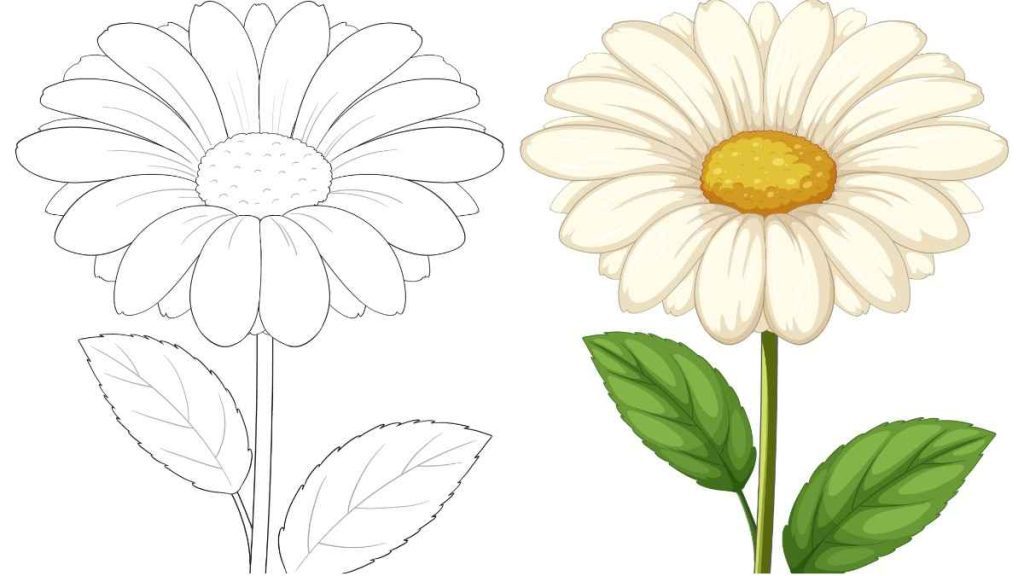
Second, their structure is a built-in learning tool. A simple flower has a clear center (the focal point), petals (radiating patterns), a stem (a strong line), and leaves (symmetry and shape). Without a single lesson, a child learns about composition, radial symmetry, and natural geometry.
Finally, flowers are a bridge to the real world. A child can color a daisy, then go outside and find one. That connection between their art and nature is powerfully validating. It turns a flat activity into an act of observation and celebration of the world around them. In my experience, this tangible link is what transforms a “filler activity” into a meaningful moment of discovery. The flower coloring sheets isn’t just something to finish; it’s a portal to looking at their environment with an artist’s eye.
Why Kids Are Naturally Drawn to Flower Coloring Pages
So, we’ve established the inherent “magic” of the flower as a subject. But this isn’t just a theoretical art lesson. If you’ve ever placed a stack of coloring sheets in front of a child superheroes here, cartoon characters there, and a few floral designs tucked in the middle you might have noticed a curious trend. Little hands often drift toward the flowers first. This isn’t a coincidence. It’s a perfect alignment of developmental wiring and aesthetic appeal.
From a toddler’s first wobbly crayon grip to a pre-teen’s detailed shading, flowers meet kids exactly where they are. Their appeal is primal and deeply connected to how a child’s brain perceives and interacts with the world. Let’s break down exactly why that is.
Bright Shapes, Soft Curves, Endless Imagination
Think about a child’s early drawings: a sun is a circle with lines. A person is a circle with sticks. The circle is a foundational, comfortable shape. Now look at a basic flower design. At its heart, it’s a welcoming circle surrounded by soft, curving petals. There are no harsh, intimidating corners or jagged, difficult-to-navigate edges. These soft curves are visually soothing and physically easier for an undeveloped fine motor system to navigate. A child doesn’t have to execute a perfect right angle; they can swoop their crayon in a satisfying, organic arc. This accessibility breeds confidence, not frustration.
But the simplicity of the form is the ultimate Trojan horse for imagination. A flower doesn’t have to be a realistic daisy. That circle can become a psychedelic rainbow target. Those petals can be striped, polka-dotted, or each a different neon color. I’ve seen a child turn a rose outline into the flaming hair of a garden fairy and use the stem as her magical staff. The recognizable form provides a safe starting point, but the open-ended nature of color and pattern invites the child to be the creator of the rules. It asks, “What could this be?” rather than dictating, “This is what it is.”
How Floral Patterns Stimulate Creativity
This is where the true artistry begins. A complex floral pattern think of a mandala-style rose or a page filled with intertwining honeysuckle presents a delicious puzzle for a young mind. It’s a structured playground. The lines define the spaces, but within each tiny leaf or petal, the child is the absolute authority.
This structure is liberating, not restrictive. For a child overwhelmed by a blank page, a detailed floral pattern provides a clear “map.” Their job isn’t to invent the universe from scratch; it’s to populate and bring to life a world that already has beautiful architecture. They make micro-decisions: “This tiny hexagon in the beehive gets colored gold. This dewdrop on the petal stays white.” This process of selective, focused creation builds narrative thinking. They’re not just coloring; they’re telling a visual story within the framework, deciding what is important, what shines, and what recedes. It’s a master class in composition at a subconscious level.
The Role of Repetition and Symmetry in Child Enjoyment
Watch a child color a sunflower. They’ll often color one petal yellow, then move to the one directly across from it, then the next pair. They are instinctively seeking the symmetry. This isn’t just neat-freak behavior; it’s a deep-seated cognitive comfort. The human brain is pattern-seeking, and a child’s brain is building its understanding of order and predictability. Symmetrical, repeating patterns in flower the identical petals, the mirrored leaves provide a sense of balance, harmony, and predictable satisfaction.
There’s a rhythm to it, a calming, almost meditative repetition. Coloring the tenth identical petal is not boring; it’s empowering. It’s a task they have mastered. They know the “how,” so they can focus on the “what if “What if I make this one petal have a gradient?” This repetitive action within a safe, beautiful framework is incredibly regulating. It can calm an anxious mind, focus a scattered one, and provide a profound sense of completion and order in a child’s often chaotic world. The finished product is a testament to their patience and focus, a visual echo of the harmony they’ve created with their own two hands.
Coloring as Play, Learning, and Relaxation
Understanding why kids are drawn to flower pages is only half the story. The real magic unfolds in the quiet moments after the crayon first touches the paper. What looks from the outside like simple play is, in fact, a powerful trifecta of developmental activity. Flower coloring sheets uniquely blurs the lines between fun, education, and therapy, making it one of the most potent and underrated tools in a parent’s or educator’s kit.
In my years of curating activities for children, I’ve learned to spot the difference between busy and engaged. Busy work fizzles out quickly, leaving a trail of boredom. True engagement, like what a great floral coloring sheet provides, absorbs a child completely, leaving behind a sense of calm accomplishment. This is because it seamlessly integrates three core human needs: the need for play, the need to learn, and the need for peace.
Emotional Benefits for Kids
Let’s call it what it is: emotional regulation. A child’s world is big and loud, full of expectations and overstimulation. A flower coloring sheets is a controlled, peaceful universe where they are in command. There is no wrong answer, no deadline, no competition. This autonomy is incredibly empowering for a young psyche.
I’ve watched a frustrated, tearful child (sometimes my own nephew) completely reset their emotional state by sinking into the rhythmic, repetitive motion of filling a large, simple tulip petal with color. The act itself is a form of non-verbal processing. As the hand moves, the mind settles. The bright, cheerful subject matter sunflowers, daisies, blooming gardens subconsciously nudges their emotional state toward positivity. Completing the picture provides a tangible “win,” a boost in self-esteem. They’ve made something beautiful from nothing, and that proof of capability is a powerful antidote to the helplessness that often fuels big feelings. It’s a safe space to just be, without performance.
Focus, Patience, and Quiet-Time Advantages
This is where the “learning” part of the equation shines, disguised as fun. In an age of instant gratification and frantic screen flickers, the act of coloring a detailed floral sheet is a masterclass in delayed gratification and sustained attention. It’s a marathon, not a sprint.
The child must make a plan, even a simple one: “I’ll do the petals first, then the center, then the stem.” This is executive functioning in action. They must exercise fine motor control to stay (mostly) within the lines, building the hand-strength and coordination crucial for writing. Most importantly, they practice patience. A garden scene with multiple flowers isn’t finished in thirty seconds. It requires returning to the task, persevering through the “big middle” where the finish line seems far away. The completion of that final leaf brings a deep, earned satisfaction that a quickly won mobile game level simply cannot provide.
This cultivated focus naturally generates that holy grail: productive quiet time. It’s not zoning out in front of a screen; it’s a state of “flow,” where the child is actively, peacefully immersed. This quiet concentration is restorative for their nervous system and, let’s be honest, a vital respite for the adults in their orbit. You’re not just giving them something to do; you’re giving them (and yourself) the gift of a calm, focused mind.
Educational Benefits of Flower Coloring Sheets
Many people still see coloring as “just something to keep little hands busy.” As an expert who has collaborated with early childhood educators, I can tell you that perspective is outdated. A well-designed flower coloring sheets is a stealth learning tool, packed with layered educational opportunities that are as vibrant as the colors used to fill it. The key is understanding that the education happens through the play, not as a separate, tedious exercise. It’s learning by stealth, and it’s incredibly effective.
Let’s move beyond the surface and look at the concrete developmental muscles this delightful activity strengthens.
Developing Fine Motor Skills
This is the most immediate and tangible benefit, the foundation for so much else. Think of fine motor skills as the physical hardware a child needs to interact with the world to write, to button a shirt, to use scissors.
Hand-Eye Coordination and Pencil Control: Every time a child aims their crayon for the narrow space between two petals, they are performing a complex neurological dance. Their eyes send information about the shape’s boundary to their brain, which then sends precise signals to the small muscles in their fingers, hand, and wrist to guide the tool. Coloring a curved petal requires continuous, fluid micro-adjustments. This isn’t just drawing; it’s target practice. It’s the same fundamental skill required for forming the letter ‘O’ or tracing a line. Flower coloring sheets, with their mix of sweeping curves and smaller, intricate centers (like a daisy’s middle), provide the perfect graded challenge broad areas for confidence-building and tiny spaces for precision work.
Boosting Color Recognition and Creativity
This is where art and science bloom together. A flower coloring sheets is a laboratory for color theory and personal voice.
Learning Color Combinations: Nature is the greatest art teacher. While a child is free to make a rose electric blue, the very subject matter invites natural exploration. You’ll hear them think aloud: “The center is brown… the petals are pink…” They start with literal representation, which is a cognitive act of observation and matching. Then, the magic happens. They experiment. “What if I make the stem pink and the petals green?” This playful mixing is how they learn about harmony, contrast, and mood. They discover, through doing, that yellow and orange feel sunny and warm next to each other, or that a single red petal in a field of purple makes that red “pop.” It’s experiential learning at its best.
Encouraging Personal Expression: A flower is never just a flower in a child’s hands. It becomes a canvas for their inner world. The choice to color a entire page in soothing pastels versus fierce, bold neons is a non-verbal communication of their mood. I’ve seen a shy child painstakingly add intricate, tiny patterns to each petal, embedding a hidden world of detail. I’ve seen an energetic one use broad, confident strokes of vibrant color. There is no “right” answer, which is the ultimate permission slip for creativity. They learn that their choices have value, that their unique perspective can make something beautiful.
Supporting Early Learning and Focus
In a distracted world, the ability to focus is becoming a superpower. Flower coloring sheets are a training ground for this critical skill.
Helping Kids Stay Engaged: The structure of the drawing provides a clear, achievable goal: “Fill this space with color.” This singular, concrete task channels a child’s mental energy into a productive flow state. Unlike open-ended play which can sometimes lead to overwhelm, the coloring sheet offers a bounded challenge. It’s mentally absorbing without being frustratingly difficult. This sustained engagement builds their attention span muscle, teaching them the rewarding feeling of seeing a complex task through to completion.
Reducing Screen Dependence: This is perhaps one of the most significant modern benefits. Coloring offers a tangible, tactile, and slow alternative to the hyper-stimulating, fast-paced world of screens. It engages different parts of the brain the planning, motor, and sensory centers, rather than just the passive visual processing often triggered by videos. It’s a digital detox in disguise. The quiet, hands-on focus required provides a neurological counterbalance to screen time, helping to re-calibrate a child’s tolerance for the slower, richer pace of the physical world. You’re not just taking a device away; you’re offering a genuinely compelling and satisfying analog experience.
What Makes Flower Coloring Sheets Kids Truly Love
Having explored the profound why, we now arrive at the practical art of selection. Not all coloring sheets are created equal. In my work, I’ve sorted through thousands, and the difference between a sheet that is abandoned in two minutes and one that is cherished, completed, and proudly displayed comes down to a few key, non-negotiable design principles. Knowing these turns you from a passive printer of pages into a curator of experiences, capable of matching the perfect sheet to your child’s moment.
A sheet a child “truly loves” is one that respects their developmental stage, speaks to their sense of wonder, and is engineered for success from the first crayon stroke to the last. Let’s break down the anatomy of a winner.
Age-Appropriate Designs
This is the most critical filter. A design that is either too babyish or frustratingly complex will instantly break the spell.
Simple Flowers for Toddlers (Ages 2-4): Think bold outlines, giant shapes, and tons of negative space. A single, large sunflower that fills the page, with five or six chunky petals and a big circle center, is perfect. The lines should be thick and dark, almost like a road map for their still-wobbly crayon. Complexity is the enemy here; the goal is motor success and color recognition, not intricate detail. A happy daisy, a basic tulip, a puffy cloud-shaped blossom these are the heroes for tiny hands. They provide a satisfyingly quick sense of completion, which is pure gold for a toddler’s attention span.
Detailed Flowers for Older Kids (Ages 5+): Here is where you can introduce narrative and complexity. Think of a garden scene with multiple flowers of different sizes, perhaps with a friendly ladybug hiding on a leaf. Mandala-style flowers with repeating patterns within the petals are fantastic for this age. Intricate roses, bouquets in a vase, or flowers with patterned pots engage their advanced motor skills and growing patience. These designs offer a longer journey, with hidden details (like tiny dewdrops or veins on leaves) that reward their focused attention. They’re not just coloring; they’re exploring a miniature world.
Cute, Friendly, and Fun Illustrations
Children anthropomorphize their world. A flower isn’t a botanical specimen; it’s a potential friend.
Smiling Flowers, Butterflies, Bees: A sunflower with a gentle smile in its center, a daisy with blush marks on its petals, a chubby bumblebee hovering nearby these elements transform a page from a diagram into a story prompt. They inject warmth and personality. They don’t just ask “What color am I?”; they ask “What’s my story? Am I happy? Is the bee my friend?” This narrative layer fuels imagination long after the coloring is done. I’ve found that sheets featuring these friendly companions are the ones kids name, talk to, and return to color again in a different “mood.”
Non-Intimidating Designs: This is subtle but vital. Avoid overly realistic, thorny, or wilted flowers for young children. The aesthetic should be soft, rounded, and welcoming. Sharp angles, drooping petals, or dark, gothic illustrations can feel unsettling. The goal is to invite joy and calm, not to introduce subconscious unease. The most beloved sheets live in a space of perpetual spring cheerful, bright, and utterly safe.
Balance Between Simplicity and Detail
This is the masterstroke of great sheet design: the “Goldilocks Zone” of engagement.
Avoiding Overly Complex Pages: A sheet crammed with microscopic detail is a recipe for overwhelm and defeat. If a child looks at it and feels they can never finish, they simply won’t start. This crushes motivation. The complexity should be bite-sized contained within individual elements. For example, a sheet might have three large lilies, each with a simple, pretty pattern inside their petals, rather than a hundred tiny, identical blossoms.
Keeping Kids Motivated to Finish: The ideal sheet has a mix of large, quick-win areas and smaller, more detailed sections. A child can color the big, simple petals first, gaining momentum and confidence. Then, they can tackle the detailed center or the patterns on the pot, which requires more focus. This rhythm of challenge and reward carries them through to completion. They experience the dopamine hit of progress multiple times, not just once at the very end. A finished sheet isn’t just a picture; it’s a trophy for their perseverance, and the design itself should be their silent coach, guiding them to that victorious feeling.
Different Types of Flower Coloring Sheets
Armed with the principles of what makes a sheet truly engaging, we can now explore the wonderful variety available. Think of this as your menu. Just as you wouldn’t serve a toddler a seven-course gourmet meal, matching the type of coloring sheet to your child’s developmental stage and current mood is key to a successful, joyful experience. Over the years, I’ve categorized them into three broad tiers, each serving a distinct purpose and unlocking different kinds of creative play.
Choosing the right type isn’t about limiting a child; it’s about setting them up for a win. A toddler given a mandala will be frustrated, but an older child given an oversimplified flower may feel bored and unchallenged. Let’s match the tool to the task.
Simple Flower Coloring Pages for Toddlers
For our youngest artists (roughly 2-4 years old), the goal is motor success and color discovery. At this stage, the act of making a mark and seeing color appear is the magic. The design must facilitate this pure, physical joy.
Big Shapes and Bold Outlines: These sheets are the foundation. Imagine a single, giant blossom that nearly fills the page. The outline is thick, black, and unmistakable like coloring inside a friendly, puffy cloud. We’re talking about basic, recognizable shapes: a circle sunflower with 5-6 wedge-like petals, a tulip that’s essentially a “U” shape with a stem, or a happy daisy. There is abundant negative space (the white paper around the shape), which is crucial. It means there’s no wrong place to put the crayon, reducing pressure. The simplicity allows them to experiment with gross motor movements (big arm sweeps) and to complete the picture quickly, fostering a powerful sense of “I did it!” These sheets are less about creating art and more about celebrating the fundamental connection between hand, tool, and colorful result.
Creative Floral Scenes for Preschoolers
As children enter the preschool and early kindergarten years (ages 4-6), their cognitive and narrative abilities explode. A standalone flower is nice, but a scene is a story waiting to happen. This is where coloring becomes imaginative play.
Flowers with Animals and Nature: This is the sweet spot. Think of a garden scene: a few large, simple flowers in the foreground, a smiling sun in the sky, a fluffy cloud, a friendly ladybug on a leaf, perhaps a caterpillar on a stem or a butterfly nearby. These elements transform the activity. Now, the child isn’t just coloring; they’re populating a world. They decide if the ladybug is red or purple, if the sun is yellow or (delightfully) green. This type of sheet encourages storytelling. They might narrate as they go: “The butterfly is visiting the red flower because it has sweet nectar!” It builds vocabulary (stem, petal, antennae, dew) and introduces basic ecology in the most gentle, playful way. The composition is still uncluttered, but it offers more elements to explore, extending engagement and satisfying their growing curiosity.
Detailed Flower Patterns for Older Kids
For school-aged children and beyond (7+), the physical challenge of staying in the lines is often mastered. The new frontier is pattern, patience, and intricate beauty. This is where coloring becomes a true artistic pursuit and a mindful practice.
Mandala-Style Flowers: These are arguably the most engaging for this age group. A mandala is a circular, geometric design, often radiating from a center point. When this form is merged with floral motifs petals that contain smaller patterns, concentric circles in the center filled with dots and lines it creates a mesmerizing puzzle. Coloring a floral mandala is a deeply focusing activity. It requires planning (“Should I color all the tiny diamonds the same, or alternate colors?”), offers endless opportunities for creative color schemes, and provides a profound sense of balance and completion. The repetitive, structured nature is inherently calming and meditative, perfect for kids who need a screen-free way to unwind or focus their busy minds.
Pattern-Based Coloring Pages: Beyond mandalas, this category includes sheets where the flower itself is composed of patterns. Imagine a rose where each petal is filled with intricate swirls, cross-hatching, or geometric shapes. Or a page of scattered blossoms, each with a different internal pattern (polka dots, stripes, zigzags). These pages appeal to the child’s sense of order and design. They are exercises in micro-decision-making and consistency. They teach that beauty exists in detail and reward sustained effort. Completing such a page is a significant accomplishment, a testament to their focus and artistic dedication. It’s this tier that often hooks older kids and even adults, proving that a great coloring sheet is ageless in its appeal.
How Parents and Teachers Can Use Flower Coloring Sheets
Understanding the “what” and “why” is powerful, but the true magic happens in application. How you introduce and frame this activity makes all the difference between it being another piece of paper and becoming a cherished ritual. As both a blogger and a former classroom volunteer, I’ve seen the transformative effect when adults shift from handing out sheets to curating an experience. Here’s how to move from theory to practice, whether you’re at home, in a classroom, or on the go.
At-Home Creative Time
At home, coloring shouldn’t be a last-resort distraction. Positioned intentionally, it becomes a cornerstone of peaceful, creative family culture.
Quiet Activities for Weekends and Evenings: Instead of defaulting to screens during the post-dinner wind-down or on a slow Sunday afternoon, make a “Coloring Corner.” Have a dedicated tray or basket with a rotating selection of flower coloring sheets (simple to complex), a cup of quality colored pencils or gel crayons (they glide easier than waxy crayons, which reduces frustration), and a clipboard. Announce, “I’m going to do some coloring to relax for 20 minutes. Would you like to join me?” Modeling the behavior is key. Sit with them. Put on some soft, instrumental music. Color your own sheet yes, you need one too. This shared, quiet focus creates a bubble of calm connection without the pressure of conversation. It teaches that slowing down and creating beauty is a valid and rewarding way to spend time, for kids and adults alike.
Classroom and Learning Activities
In an educational setting, flower coloring sheets are versatile, low-prep tools that serve multiple learning objectives beyond art.
Art Lessons and Free-Time Activities: In art class, use them to teach specific concepts. For a lesson on warm vs. cool colors, provide a floral mandala and ask students to color it using only one family. For a pattern unit, have students design and fill in their own patterns on the petals of a simple flower outline. During science, when learning about plant parts, a detailed flower coloring sheets can be a labeling diagram color the stigma red, the anther yellow, the xylem green. As a free-time activity, always have a “Zen Zone” basket with intricate floral patterns. These are perfect for the student who finishes work early, feels overstimulated, or needs a mindful reset. It’s a productive, quiet choice that respects the classroom atmosphere while giving individual brains a chance to recharge through structured creativity.
Party, Travel, and Printable Fun
The portability and universal appeal of a great coloring sheet make it a secret weapon for managing group energy and tedious wait times.
Birthday Activities: Skip the chaotic, sugar-fueled games. Set up a “Garden Studio” table at a child’s birthday party. Print out a variety of cute, friendly flower scenes (with butterflies and bees) on cardstock. Provide a buffet of coloring tools: markers, glitter pens, stickers for added flair. This gives kids an immediate, calm activity as guests trickle in, serves as a perfect cooldown between energetic games, and provides a personalized party favor they created themselves. It prevents meltdowns and keeps the vibe joyful, not frantic.
Screen-Free Travel Entertainment: This is my personal favorite hack. Before a trip, I never print just one sheet. I assemble a “Color & Go” travel portfolio. I take a simple folder with clips, fill it with a progression of sheets (start with simple, move to complex for longer stretches), and staple together a small themed set to make a custom coloring book. Pair this with a tri-fold lap desk and a pencil case of twistable crayons (no sharpeners needed), and you have an engagement kit that works in cars, planes, and restaurant waiting areas. It’s focused, mess-free, and absorbs time in a way that feels productive and calm. It turns “Are we there yet?” into “Can I finish my garden scene?”
Tips for Choosing the Best Flower Coloring Sheets
We’ve arrived at the final, crucial step: curation. Anyone can search “flower coloring page” and hit print, but the expert move the one that yields those pinned-to-the-fridge masterpieces and genuine engagement lies in mindful selection. Think of yourself not just as a provider, but as a creative director for your child’s experience. The choices you make about format, medium, and personal relevance are the subtle details that elevate this from a generic activity to a tailored moment of joy. Let me share the insider considerations that make all the difference.
Printable vs. Digital Coloring Pages
The first fork in the road is format, and each path offers distinct advantages.
Flexibility and Convenience of Printables: This is the classic, and for good reason. Printables are tangible, portable, and final. There’s a unique cognitive satisfaction for a child in holding the paper, seeing their marks accumulate, and celebrating a finished physical product they can display. For parents and teachers, the flexibility is key: you can print on demand, choose specific paper (more on that next), and it requires no screen or battery. It’s a standalone, offline experience, which is its core strength. The convenience of a well-organized folder of PDFs means you’re never more than a minute away from a perfect activity for any mood or need.
The Digital Alternative: Tablet-based coloring apps can be engaging, but they are a fundamentally different activity. They teach tapping and swiping, not the pressure control and fine motor skill of a physical tool. However, for experimentation and sheer variety, they have a place. A child can try endless color combinations without “wasting” a page. For the artist who is hesitant to commit for fear of “ruining” a beautiful sheet, a digital trial run on a simple app can build confidence. My advice? Treat digital as the sketchbook or testing lab, and printables as the final canvas. The tactile, permanent creation is where the deepest satisfaction and developmental benefits reside.
Paper Quality and Printing Tips
This is the most commonly overlooked secret. The paper you use is the literal foundation of the experience, and it drastically affects enjoyment and outcome.
Best Paper for Crayons, Pencils, and Markers:
For Colored Pencils (especially for detailed, older-kid sheets): Use smooth, bright white printer paper (24lb or 32lb weight). The smoother surface allows for fine detail and easy blending. The heavier weight prevents tearing from enthusiastic pressure.
For Wax Crayons: A slightly toothier paper, like standard multipurpose printer paper, is actually ideal. The texture gives the wax something to grip, resulting in richer, more vibrant layers of color.
For Markers: You must use marker paper or heavy cardstock (65lb+). Standard paper will bleed through, causing frustration and ruining the back of the sheet. Cardstock also allows for bold, saturated colors without warping. For a special project, printing a beautiful floral scene on cardstock makes it feel like a true art piece.
Pro Printing Tip: In your printer settings, always select “Best Quality” or “High Resolution” for coloring pages. This ensures the lines are sharp, dark, and crisp, not fuzzy or broken. A clean, professional-looking line is infinitely more inviting to color.
Matching Designs to Your Child’s Interests
This is where you achieve the “truly love” status. A generic flower is nice. A flower that feels like theirs is magical.
Favorite Flowers, Characters, or Themes: Pay attention to their natural affinities. Does your child adore sunflowers because they grew one in a cup at school? Seek out a majestic sunflower sheet. Are they obsessed with butterflies? Find a scene where flowers are visited by detailed butterflies. For a preschooler who loves a certain cartoon character, finding a sheet that merges that character with a floral background (e.g., a fairy in a flower garden) is a guaranteed hit.
The Power of Theme Integration: Use coloring sheets to extend other interests. Reading a book about gardens? Color a page of vegetables and flowers. Learning about seasons? Find spring blossoms, summer sunflowers, autumn mums, and holiday poinsettias. This creates connective threads in their learning, making the coloring feel like part of a larger, exciting exploration of their world.
Involve Them in the Choice: When possible, offer two or three options that you’ve pre-vetted for age-appropriateness. “Would you like to color the big happy sunflower today, or the garden with the hidden bugs?” This small act of agency increases their investment and excitement from the very start.
Encouraging Kids to Enjoy Coloring More
Here lies the heart of it all. You can have the perfect sheet on premium paper, matched flawlessly to their interests, and still miss the mark if the environment feels like a test rather than an invitation. The final, most nuanced layer of expertise isn’t about the materials it’s about the culture you create around the activity. This is where coloring transitions from a task to a gift, a habit, a cherished memory. I’ve learned that the adult’s role in these moments is less instructor and more enthusiastic witness. Our job is to protect the space for pure, unjudged creativity to unfold.
Letting Kids Choose Their Colors
This is the first and most sacred rule: Relinquish control over the palette. It sounds simple, but it’s where many well-meaning adults inadvertently stifle joy.
No Rules, Only Creativity: The moment you say, “But sunflowers are yellow, not purple,” you’ve switched the activity from creative expression to a replication task. You’ve introduced the fear of being “wrong.” A child who colors the sky green and the grass blue isn’t making a mistake; they’re exploring the relationship of colors and exercising sovereign choice over their universe. I keep a vivid memory of a child explaining their purple sunflower: “It’s a midnight sunflower. It only blooms for the moon.” That is creative thinking we should kneel down and worship. Stock your coloring caddy with a wide, inspiring range of hues metallics, skin-tone packs, fluorescents and then bite your tongue. Their choices are data about their inner world, not a test of their observational skills.
Coloring Together as Family Time
This is the single most powerful motivator. Kids mimic what they see us do, not what we tell them to do.
Bonding Through Art: Don’t just hand them a sheet and walk away. Sit down. Get your own page. Put your phone face-down. This shared, quiet focus is a profound form of connection. You’re not facing each other for intense conversation; you’re sitting alongside each other, engaged in parallel play. This side-by-side dynamic is uniquely pressure-free and comforting. Chat lightly if it feels natural, but it’s also perfectly fine to exist in companionable silence, the only sound being the scratch of pencils. You’re modeling focus, you’re demonstrating that creativity is a lifelong joy, and you’re telling them without words: “What you’re doing is valuable enough for me to stop and do it too.” This transforms it from a kid’s activity to a family ritual.
Displaying Finished Artwork
The cycle of creativity isn’t complete until the work is honored. This step is the reinforcement that tells their effort mattered.
Building Confidence and Pride: Find deliberate, meaningful ways to showcase their art. This goes far beyond a magnet on the fridge.
Rotate a “Gallery Wall” in their room or a hallway using washi tape or simple frames.
Laminate a favorite piece to use as a placemat for a special dinner.
Send a colored-in flower coloring sheet as a homemade greeting card to a grandparent. There is no higher compliment to a child than hearing, “Grandma loved your flower so much she put it on her fridge!”
For teachers, create a “Bloom Where You’re Planted” bulletin board dedicated solely to floral art.
The act of displaying their work validates their time, effort, and vision. It concretely teaches them that their unique perspective has value and beauty. It builds the kind of intrinsic confidence that makes them eager to return to the page, not for your praise, but for their own satisfaction and the joy of adding to their growing gallery.
The True Expert’s Takeaway: The goal is not to create a perfect picture. The goal is to nurture a creative spirit one that feels safe to experiment, values focused time, and knows its expressions are worthy of celebration. When you master this final layer of encouragement, you’re not just giving them something to do. You’re giving them a lifelong language for joy, a tool for mindfulness, and the unwavering belief that they can make beautiful things.
Conclusion
We began with a search for an activity that was more than just busywork something that could captivate, calm, and cultivate a child’s growing mind. What we’ve explored is how a humble flower coloring sheet, often dismissed as simple, is in fact a remarkably sophisticated tool. It’s a single page that holds within its lines a world of emotional solace, cognitive development, and untamed creative potential.
Emotionally, these sheets provide a sanctuary of control and calm, a meditative space where frustration can be smoothed into focus with the rhythmic stroke of a crayon.
Educationally, they are a stealth workshop for fine motor skills, color theory, patience, and the invaluable ability to see a task through to completion.
Creatively, they are a boundless playground. From the toddler’s first confident splash of color on a giant petal to the older child’s meticulous patterning of a floral mandala, they offer a perfect, self-paced challenge that says, “You are the artist here.”
This is why flower coloring sheets remain a timeless favorite, long after other fads have faded. In a fragmented, digital world, they offer a rare experience of wholeness where hand, eye, mind, and heart work in unison to create something uniquely and personally beautiful.
So, the next time you see a child light up while coloring a daisy or beam with pride as they point out their polka-dotted rose on the fridge, remember: you’re witnessing more than a pretty picture. You’re seeing the bloom of confidence, the roots of learning, and the simple, profound joy of making a mark on the world.